

By Jim Hingst
Hot dogs are as American as apple pie. However, the history of the “frankfurter” begins in Frankfurt, Germany in 1477, before Columbus discovered the Americas. The Germans called the frankfurter a “Dackelwurst” or “Dachshundwurst” after the long, skinny dog, the Dachshund. That’s why the long, skinny frankfurter is more commonly referred to as a hot dog. Of course, hot dogs are also called wieners or “Wienerwurst” after the city of Wien or Vienna in Austria.
When Germans immigrated to the United States in the 19th century, they introduced Americans to their frankfurters. About 1871, a German immigrant opened the first hot dog stand in Coney Island in the Brooklyn borough of New York City.
German immigrants were not the only ones to influence the way Americans enjoy hot dogs. Other nationalities have added their own twist to America’s favorite summertime snack. These include the Poles, Greeks, Macedonians and Mexicans.
What Type of Hot Dog Should You Buy?
Making a great hot dog for your cook out, begins with buying a high-quality dog. When shopping, remember that you get what you pay for. The best hot dogs will cost more – a lot more. The best tasting brands include Nathan’s, Hebrew National and Vienna®Beef.

Regardless
of the brand that you choose, the hot dog should be all beef with natural
casings. The franks should not be made from turkey, or a combination of meats
or a meat substitute.
The natural casings keep the juices from escaping from the inside of the franks, which prevents them from drying out. The skins also allow the wiener to maintain its shape. Otherwise, it could shrivel up and go limp. Who wants a limp wiener?
If you are cooking for friends, buy the good stuff. On the other hand, if you are cooking for kids, buy the cheap wieners. The cheapest of the cheap are usually Bar-S hot dogs. In my opinion, these hot dogs suck big time, but your kids will never know the difference. Other wieners, which are bad choices for a variety of reasons, such as high calories, high fat or high sodium content, include Oscar Mayer Turkey Dogs and Ball Park Franks.
Chicago Style Hot Dogs
Chicago is known for many things: deep dish pizza, Al Capone, corrupt politicians and “da Bears”. The city is also known for its hot dogs. Many believe that a Chicago style hot dog is the best hot dog in the world. Try telling someone in New York that!
If you want to make a Chicago style of hot dog, it must be a Vienna® Beef-brand of dog in natural casings. The natural casing is important, because it locks in the hot dog’s juices until you bite into it and the dog “snaps” back at you.

This all-beef hot dog was the creation of two Jewish immigrants from Austria-Hungary, Emil Reichel and Sam Ladany, who founded the Vienna® Beef Company. In 1893 they introduced their hot dogs at the Columbian Exposition in Chicago. At the fair, their wieners became a big hit, and the rest is hot dog history.
How to Steam Hot Dogs
To cook a Chicago style hot dog, you will need a pot with a lid and a steamer basket. To safely handle the hot dogs and buns, you will also need tongs. Remember, that water boils and turns to steam at a temperature of 212ºF. Before either inserting or removing hot dogs from the pot, allow the steam to escape.
Pour
an inch of water into the pan. Next, insert the steamer basket at the pan’s
bottom. Make sure that the steamer basket is higher than the water level, so
the hot dogs are no sitting in the water.
 A
collapsible steamer basket elevates food above the water at the bottom of a
pan. It expands to fit into a variety of pot sizes.
A
collapsible steamer basket elevates food above the water at the bottom of a
pan. It expands to fit into a variety of pot sizes.Cover the pan and bring the water to a boil. Using the tongs, place the hot dogs into the water.
Steam the wieners for about 10 minutes, until the internal temperature of the meat reaches 165ºF.

Correctly Dressing Chicago-Style Hot Dogs
Each hot dog joint in Chicagoland dresses their wieners differently. An authentic Chicago-style hot dog, however, consists of a steamed Vienna® Beef wiener and steamed poppy seed bun topped with yellow mustard, chopped white onion, neon-green Chicago style relish, a sliced dill pickle spear, 2 hot sport peppers, 2 tomato slices and celery salt.

I don’t know why the marketers at Vienna® Beef ever thought that their dyed green relish looked more natural than its natural brownish-green color. The neon green of this product looks like no food product that I have ever seen other than the candied green fruit used in holiday fruit cake or what I imagine the appearance of soylent green might have been. Nevertheless, this relish is an essential topping for a Chicago-style wiener.
Chicago-style hot dogs are served on poppy seed buns. If you live in either Chicagoland or the New York City areas, I recommend that you buy S. Rosen’s buns. The company has had bakeries in both cities for more than a hundred years.
To properly prepare these buns for your hot dogs, they should be steamed. Among Chicago natives, toasting the buns is considered hot dog heresy.
According to hot dog aficionados, the sequence in which you top the steamed wiener is very important to duplicating this Chicagoan culinary experience. You should apply the condiments in the exact order as listed above.
Eating an authentic Chicago-style hot dog is a complete meal unto itself. Topped with a variety of vegetables, this wiener is described as being “dragged through the garden”.
When making a Chicago-style hot dog, there are some things you should never do. Never boil your hot dogs. Boiling is not the same as steaming. A boiled hot dog is called a “dirty water dog”.
Boiling cooks out the flavoring in the wieners. After ten minutes, the result is a waterlogged, tasteless hot dog. What’s more, boiling often causes the wiener to burst open.
Instead, Vienna® Beef hot dogs should be steamed. In 3 to 5 minutes, a hot dog is fully cooked. Unlike boiling, steaming results in a juicy, flavorful dog.
True Chicagoans use yellow mustard, not Dijon mustard and certainly not spicy mustard. What’s more, I agree with Dirty Harry who said that “nobody, but nobody, puts ketchup on a hot dog”. Try telling that to my nine-year old grandson, Grady. What can I tell you? He puts ketchup on everything.
Nathan’s Famous Hot Dogs
You can’t write about hot dogs and ignore hot dogs from Coney Island, where the first stand was opened in 1867. Synonymous with frankfurters from Brooklyn are Nathan’s Famous hot dogs. In 1916, Nathan Handwerker and his wife Ida, Polish Jew immigrants, opened a hot dog stand in Coney Island. To promote his business, Handwerker staged hot dog eating contests and undercut his competitor’s prices.
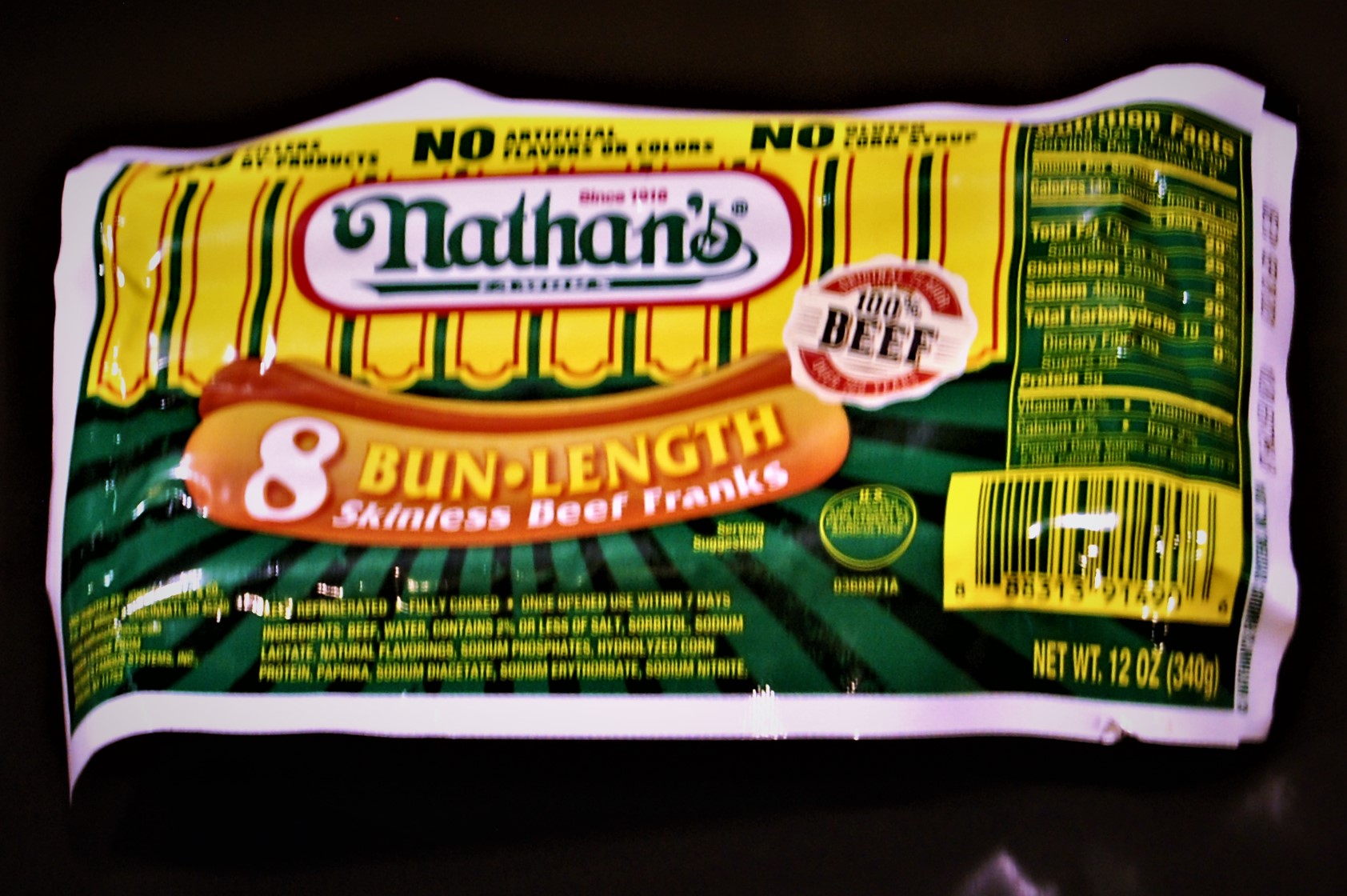
What really differentiated Nathan’s Famous hot dog was its taste, which was based on a recipe of Ida’s grandmother. In more than 100 years, that recipe has virtually remained the same. If you are going to grill a hot dog, you can’t go wrong in buying Nathan’s Famous all beef hot dogs in natural casings.
Hot dogs are often a regional product. Vienna® Beef hot dogs are difficult to find in many parts of the United States. Nathan’s Famous hot dogs, on the other hand, gained nationwide popularity and are sold in grocery stores from sea to shining sea.
The Right Way to Grill Hot Dogs

Before you start grilling hot dogs, clean the grate and oil it.
Arrange your charcoal for indirect cooking. Do not grill the wieners over direct heat.
When arranging the franks, they should be positioned perpendicular to the grate. This allows for easy turning.
When using indirect heat for cooking, keep the lid of the grill closed.
Turn the hot dogs regularly to ensure even cooking.
Under no circumstances should you poke holes in the casing of the wieners. This allows the juices inside of the frank to drip out.
The hot dogs are done when the outside of the skin begins to brown and reaches the recommended internal temperature 150ºF and 160ºF. As temperatures exceed 165ºF, the hot dogs may split apart.
One popular way that New Yorkers top their hot dogs is with an onion
sauce, sauerkraut and mustard. Below is one recipe for that onion sauce:
Onion Sauce Recipe
2
tablespoons olive oil
1
tablespoon butter
2
large yellow onions, chopped
2
cloves garlic, minced
1
Tbsp. ancho chili powder
1/8
tsp. cinnamon
1
cup chicken broth
½
tsp. paprika
½
cup of ketchup
1
tsp. hot sauce
½
tsp. Dijon mustard
½
tsp. Worcestershire sauce
½
tsp. brown sugar
1 teaspoon BBQ rub

Add the ancho chili powder, paprika, and cinnamon. Mix the ingredients to moisten the spice powders. Continue to sauté the ingredients for 2 to 3 minutes until they are fragrant. Do not allow the garlic or spices to burn.
Add the chicken broth, ketchup, brown sugar, Dijon mustard, hot sauce and BBQ rub. Cook on low until the sauce thickens. This takes about 30 minutes.

After cooking the sauce, allow it to cool. Top hot dogs with mustard, the onion sauce and sauerkraut. See my recipe for sauerkraut in my article on Beer Brats.
You can modify the onion sauce to suit your tastes. For example, as you sauté the onions, you may want to add some chopped green peppers or Jalapeno peppers. If you make a spicy onion sauce, you may want to pair it with something to cool your taste buds, such as coleslaw.

You can store unused sauce in your refrigerator for up to a week.
The Coney Dog
Wouldn’t you guess that a hot dog covered with chili and chopped onions and called a Coney Dog is a Texas or New York innovation? It’s not! It’s a Detroit culinary creation. Now, the rest of the story…
As Greek and Macedonian immigrants passed through Ellis Island, they became acquainted with Coney Island hot dogs. Many of them settled in the Detroit area. In 1917, one Greek immigrant, Constantine Keros, created the Detroit Coney Dog.
In his restaurant, the American Coney Island, Keros sold hot dogs, which were similar to the hot dogs that he had enjoyed eating, when he first came to the United States. He also sold chili, which was a family recipe. The Coney Dog was created, when a customer asked him to top his hot dog with chili.
The traditional Coney Dog recipe calls for beef heart. Instead, the recipe below has substituted ground beef. The chili served with a genuine Detroit Coney Dog has no beans. It is topped with onions, but never with cheese.
Coney Island diners opened up throughout southeast Michigan and in Fort Wayne, Indiana. Many restaurants have their own chili recipes.
Chili Sauce Recipe

Ingredients
1 lb. 80/20 ground
beef
1 large onion, chopped
1 red pepper, chopped
1 Jalapeno pepper, chopped
2 cloves garlic, minced
Olive oil and butter for
sauteing
2 tsp. chili powder
1 tsp. cinnamon
1 tsp. paprika
1 tsp. ground cumin
1. tsp. Italian spices
½ tsp. ground allspice
2 tsp. hot sauce
1 Tbsp. yellow mustard
2 cups of ketchup
1 cup beef broth, add
additional broth as needed
1 Tbsp. Worcestershire sauce
2 tsp. brown sugar
Brown the ground beef and reserve. Any remaining oil in the pan will help in sauteing the vegetables.
In
olive oil and butter, sauté the onion, red pepper and Jalapeno pepper.
When the onion becomes translucent and begins to brown on the edges, add the minced garlic and continue to sauté for another 2 minutes.
Add the dry spices (chili powder, cinnamon, paprika, cumin, Italian spices, ground all spice) to the vegetables. Remaining oils from cooking will mix with the dry spices. Sauteing spices in oil helps in releasing their flavors. Continue to sauté for a couple of minutes until the dry spices become fragrant.
Add the browned ground beef, tomato sauce and the remaining ingredients.
Simmer until the chili sauce thickens. This will take about 30 minutes. If needed, thicken the chili sauce with a roux. Some people thicken a watery sauce with crushed Ritz crackers or Saltines.
Serve the sauce over cooked hot dogs in their buns. While it may be a Coney Dog sacrilege, I still think that sprinkling shredded cheese over the chili sauce is perfectly acceptable.

Los Angeles’ Danger Dog
In Los Angeles, the popular local hot dog is the “Danger Dog”. The Danger Dog actually originated in Mexico and not on the streets of Los Angeles. Unlike a Chicago Hot Dog, a Danger Dog is not steamed. It is cooked on a griddle.
What
differentiates the Danger Dog from other hot dogs is that it is wrapped in
bacon and topped with sauteed vegetables, including onions, red and green
peppers and jalapeno peppers. Condiments used to dress these dogs include
yellow mustard, mayonnaise and ketchup. Sometimes Pico de Gallo, red beans or
guacamole are also added to top everything off.

In making your own Danger Dog, sauté the vegetables on low for about 10 minutes. You should plan on chopping ¼ of a large onion per each hot dog. The onions should become translucent and start to brown around the edges as it caramelizes.
Wrap each hot dog with a slice of bacon, securing it in place with toothpicks. Insert the toothpicks perpendicular to the length of the hot dog. That way, the toothpick will not inhibit turning of the wieners as you are grilling them.
As you are cooking the bacon-wrapped wiener, keep turning it so the entire hot dog browns. Check on the wieners every five minutes. When you are cooking, keep the lid closed on the grill.
Grilling
the bacon-wrapped hot dogs should take about 15 to 20 minutes, depending on the
temperature of the grill. Without the bacon, cooking should only take about 10
minutes.
 My
danger dogs are a little different than the way they make them in LA. Instead
of Pico de Gallo, I added Cheese Wiz as a topping. Think of it as a Philly
Danger Dog.
My
danger dogs are a little different than the way they make them in LA. Instead
of Pico de Gallo, I added Cheese Wiz as a topping. Think of it as a Philly
Danger Dog.Try these other Signpost Recipes
The
Best Bacon Wrapped Jalapeno Poppers
The
Best Beef and Cheese Enchiladas
Bon Appetite!

© 2021 Jim Hingst, All Rights Reserved
The slit of a partially cut bread is used to hold a hot dog, grilled sausage, or steamed sausage hot dog near me Our own cutting-edge central kitchen creates the tastiest regional and foreign cuisines for the ready-to-eat food counters
ReplyDelete