
By
Jim Hingst
Everyone
has his or her favorite paint brushes, suited to their artistic style and selected
to meet their individual needs. The objective of this article is to help you
select the right brushes to help you apply paint to best express yourself.
In
selecting brushes, include a variety of sizes. Large flat and filbert brushes
allow you to quickly coat a large area, which is helpful when toning the
canvas. Many artists use large and medium brushes to make expressive visual
statements. Medium size filbert and round blunt tip brushes are great for
initially sketching your composition.
Small brush sizes are best for rendering fine detail.
In selecting brushes, the general rule of
thumb is natural hair brushes are preferred for oil-based paint, while
synthetic brushes are better for acrylic paint. Synthetic brush hairs, which
are usually either nylon or polyester, are more durable and hold up better when
used with caustic acrylics. On the other hand, natural hair is usually softer.
In
the sign industry, squirrel hair from animals from colder regions, such as
Russia, is often used for quills. This softer hair holds paint well. Other
natural hair, such as hog bristle, is stiffer and tolerates rough use.
Holding
the brush hair to the handle is the ferrule. Refer to the picture below. For
fine art brushes, ferrules are usually made of metals, such as aluminum, brass
and nickel.

Flat
Brushes.
The
hairs of flat brushes come to square ends. Available in a variety of shapes,
flat bushes are used for a variety of different applications. One of the most
common uses for flat brushes are filling in large areas, such as toning the
substrate, filling in backgrounds, glazing or varnishing. Some of the common
types of flat brushes include flat, filbert, bright and wash brushes.
Flat brushes allow
you to paint wide, straight lines, which is ideal when you are depicting
buildings and manmade design elements. With
their long brush hair, flats are similar to a sign maker’s quill. By laying the
entire belly of the brush on the substrate you can achieve excellent control,
when you need to produce a sharp edge.
Several
other bushes are similar to the standard flat brush. These include:
A. Bright
B. Wash
Brush
C. Angled
Brush
D. Filbert
Filbert Brushes.

Filbert brushes, which feature a flat tip with round ends, are
possibly the most versitile of brushes, because you can use them to create of
variety of marks. Used on its side, a filbert can deposit a thin linear stroke
of paint. By comparison, the flat edge of the filbert leaves a broad paint splotch.
Filbert brushes are useful for blocking in shapes, for filling in large spaces and for
blending.
Bright Brushes.
The
tip of a bright brush is flat and square. Its shape is nearly identical to that of a
flat brush. The difference is that the brush hairs of a bright are much shorter
than those of a flat.

Bright brushes,
which are similar to flat brushes but with shorter bristles, are ideal for
scumbling. In the painting shown above, a copy of Mary Cassatt’s Girl
Arranging Her Hair, a lighter color is scrubbed onto the surface, leaving bits
of paint over a darker color.

A
bright brush is also effective in dabbing on paint to simulate the texture of wool in
the picture shown above. This painting is a copy of Vermeer’s “Girl with a
Flute”. The technique of dabbing on paint was commonly used by Impressionist
painters.
Wash Brush.
Another type of flat
brush is a wash brush, which is larger than other flat brushes. After your
canvas is gessoed or substrate is primed, a wash brush (shown below) is used to
coat a large surface quickly. Artist will paint the background with a single
color to tone a white canvas with a solid neutral color. Wash brushes with soft
bristles are also good for applying glazes to large spaces.

Round Brushes.
Round
brushes are available with two types of tips or toes: Round Pointed Tip and
Round Blunt Tip. The various types of round brushes all come with a round
ferrule. Round Pointed Tip brushes come to a sharp point, which makes it great
for painting detail. A script liner is another type of round brush, commonly
used in the sign painting field.
Round Pointed Tip.
If
you want to paint very fine detail (such as the individual hairs on an animal
illustration), you might invest in Winsor & Newton Series 7 brushes. These round
pointed tip brushes, which are made from Kolinsky sable hairs, are expensive.
However, if you care for them properly, they will last a long time.
For
detail work, you should include the following sizes in your collection: 3/0,
2/0, 0, and 1. Winsor & Newton Series 7 brushes come with short handles.

Many artists believe that the hair from the
Kolinsky Sable, a Siberian weasel, makes the highest quality paint brushes. The
unique characteristic of Kolinsky brushes is that the ends of the hair do not
fray and the brush retains a sharp point, essential for fine detail work. These
brushes are expensive, with the largest sizes costing a couple of hundreds of
dollars.

The above photograph shows a detail of a
feathery red hat painted with Winsor & Newton Series 7 brushes. Golden Open
Series acrylic paints were used in this painting.
Natural hair brushes are also produced from other
animals. Sable hair brushes, produced from the hair of other types of weasel or
martens, are not so costly. Although these brushes are high quality, the hair
is not so durable as those of Kolinsky sable brushes.
Other types of animal hair used for paint
brushes include squirrel hair, goat hair and what is called camel hair. Camel
hair is not made from the hair of a camel. Instead, this is a combination of
different types of animal hair, such as squirrel hair, goat hair and pony hair.
In the sign maker industry, camel hair is sometimes used for pinstriping
brushes.
Round Blunt Tip.
These
brushes, featuring a blunt tip, are useful for scumbling. Sizes that you
should add to your paint set are: 0, 1, 2, and 6.

For scumbling, natural hair hog bristle
brushes withstand aggressive use. These are not your only choice, and may not
be your best choice for use with acrylics. Synthetic hair brushes, such as
Winsor & Newton Artisan brushes, are a great alternative when using
water-based paints. These synthetics are not as stiff, but they are sturdy
enough to hold their shape. More importantly, because water does not affect the
synthetic hairs, these brushes are ideal for use with acrylic paint, which
stays wet all the time.
Script Liner Brush.
A script liner brush is another type of round brush. Used for painting fine detail, liner brushes feature long, thin brush hair. See the photo below. These brushes are ideal for outlining, producing very thin lines and signing your artwork.

For working with
lettering enamels and urethane paints, Kafka script liners feature a
combination of natural and synthetic hairs. Good additions to your brush box
include the following sizes: 5/0, 2/0, 0, 1, and 2.

Script liners are ideal for outlining and
painting fine detail.
Fan Brush.
As the name implies,
the hairs of a fan brush splay out from the ferrule in the shape of a fan. If
you are planning to paint landscapes, fan brushes are a helpful addition to
your brush collection. Artists use these brushes to replicate the appearance of
grass and shrubs. Fan brushes (shown below) can also be effective in blending
two values of color.

Stippling Brush.
A stippling brush is a type of round brush,
consisting of short stiff bristles (shown below). In some cases, the tip of the
brush can be angled. This specialty brush allows you to apply dots of paint to
create gradations of value from shadow to light. Stippling brushes also let you
create transitions from one color to another analogous color. For example, you
produce a color shift from red to orange to yellow. Using the stippling
technique, you can also model a form and add subtle shadows.

A stippling brush is handled in a similar
manner to scumbling. In charging the brush with paint, you should hold it
perpendicular to your palette. You only want paint on the tips of the brush
bristles. Offload any excess of paint on the hairs, on paper toweling. With
very little paint on the brush, lightly tap or dab it on the substrate, leaving
dots of paint.
Cleaning Your Paint Brushes.
Whether you are a sign painter or an artist,
whether you use oil based or acrylic paints, how you clean your brushes is
similar. When you are finished painting, squeeze out the excess paint between a
folded paper towel. Do not pull at the bristles of the brush or you could pull
out some of the hair.
If you are using oil-based paint, such as
lettering enamel, swish the hairs of the brush in mineral spirits. Squeeze any
residual paint from the brush hairs between paper toweling. When the brush is
satisfactorily clean, dip the head of the brush in a commercial grade brush
oil. Before using the brush again, wash out the oil with solvent.
Some brands of brush oil can get gummy. If you
need to, remove the oil with lacquer thinner, then rinse the head of the brush
immediately in mineral spirits. Before using the brush, dry any of the residual
mineral spirits by rolling the brush handle rapidly between your two hands. Be
aware that any remaining solvent will spray from the head of the brush.
If you are using acrylic paint, after you
squeeze out the excess paint in a paper towel, swish the brush head in
denatured alcohol. Wipe the head of the brush clean of the paint residue. Then
wash the brush hair with soap and water until it is thoroughly clean.
Storing Your Paint Brushes.
After you clean your paint brushes, store them so the hair doesn’t get bent out of shape. In the sign industry, many old sign painters store their brushes in brush boxes, which is handy if they travel back and forth from their shop to job sites.

In
the shop, many simply lay the brushes flat in a cookie baking tray. If you are
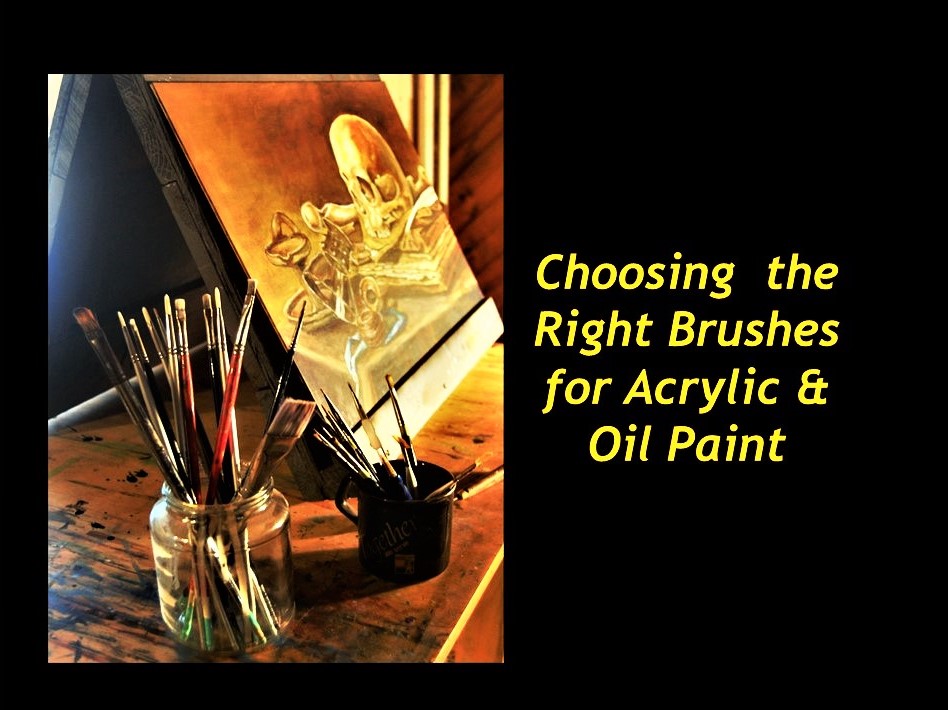
a studio artist, you can use a clean glass jar for your long handle brushes and
an old mug for your short handle ones, as shown below.

Other Painting Articles
Why Paint Wrinkles
Why Enamels can Dry Slowly
Why Paints and Pigments Degrade
Paint Pigment Basics
Safely Working with Pigment Powders
Physical Properties of Paints and Pigments
Troubleshooting and Preventing Paint Problems
How to Clean Brushes Used for Water-Based Paints
Blending Colors
Painting with a Limited Palette
Making Oil Paint
Oiling Out a Canvas for Oil Painting
Flesh Tone Paint Recipe
Why Yellow Ocher and Naples Yellow are Important in Painting Fleshtones
White Lead Oil Paint
Best White Paint for Oil Painting
Damar Varnish Recipe
Fat Over Lean Rule
Paint Chemistry Terminology

Experts Communication provides best Customer Services jobs in Karachi.
ReplyDeleteVery informative blog. i got amazing knowwledge of brushes from this blog.
ReplyDeleteI offer printed vehicle wraps at affordable price.
I do not even know how I ended up here, but I thought this post was good. I don't know who you are but certainly you are going to a famous blogger if you are not already ;) Cheers! Alex Shcolyar
ReplyDeleteThank you for this informative article. As an acrylic painter, choosing the right acrylic paint brushes is crucial.
ReplyDelete